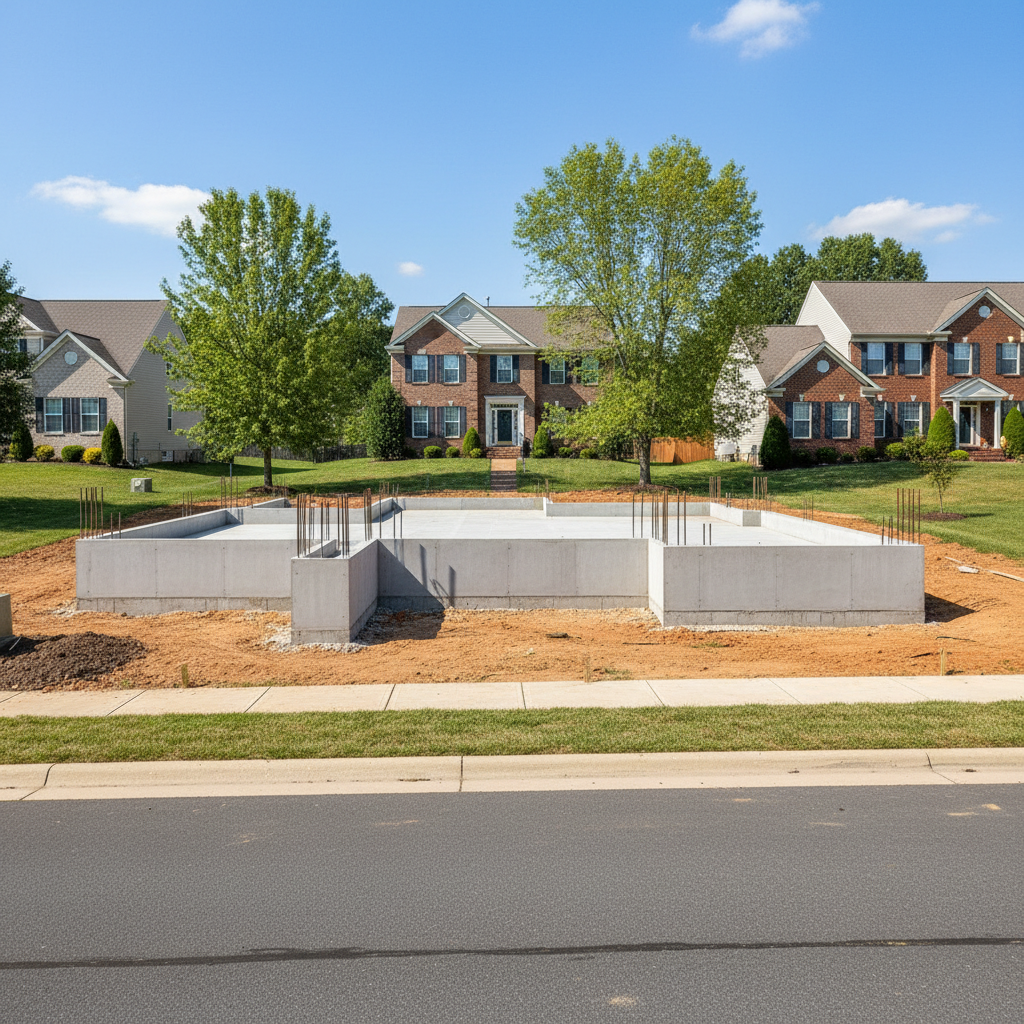
Ever dug a post hole out near St. Charles and hit that stubborn Charles County clay? If you have, you already know why pouring a foundation around here is not quite the same as reading a generic manual online. Our soil packs tight, holds water when those heavy summer thunderstorms roll up from the Potomac, and shifts when the temperature drops. That movement puts serious stress on concrete foundations.
When Oasis Concrete is out looking at cracks or prepping a pour for a new addition off Smallwood Drive, the first thing we look at is drainage. Water is the enemy of concrete. If you do not grade the earth right or install proper footings that sit below the local frost line, you are inviting trouble. Around here, foundations need to go deep enough to stay put through the freeze-thaw cycles we get every winter. Skimp on that depth, and you will see hairline cracks turning into major headaches by spring.
What Makes Waldorf Soil Unique
The ground composition across Southern Maryland varies quite a bit. Some neighborhoods sit on sandy loam, while others deal with dense clay pockets that trap moisture right against your basement walls. When that clay gets soaked, it swells up and pushes hard against the concrete. Then it dries out, shrinks, and leaves a gap. That constant pushing and pulling is why solid reinforcement steel and the right mix design matter so much.
At Oasis Concrete, we adjust our mix depending on what the job demands and where it is located. Pouring a foundation for a split-level in an established neighborhood requires a different approach than laying a slab for a brand-new garage build. You cannot just slap a standard formula into every hole and hope for the best.
Signs Your Foundation Needs Attention
- Sticking doors or windows that suddenly will not latch right
- Cracks running diagonally across your basement block walls
- Water seeping in every time it rains hard for an hour
If you spot those warning signs, do not just patch the surface with some quick-dry filler and cross your fingers. That is like putting a band-aid on a broken arm. You have to figure out why the foundation moved in the first place. Sometimes it is a gutter downspout dumping water right next to the footing. Other times, it is settling soil that needs stabilization.
Getting a foundation right the first time saves you money and stress down the road. Whether you are planning a new build or trying to salvage an older structure, make sure whoever is doing the digging and pouring actually understands the quirks of our local terrain. Oasis Concrete provides Concrete Contractor services for homes in Waldorf, MD, and makes all the difference between a house that stands strong for 15 to 20 years or more and one that keeps you up at night listening to settling creeks.