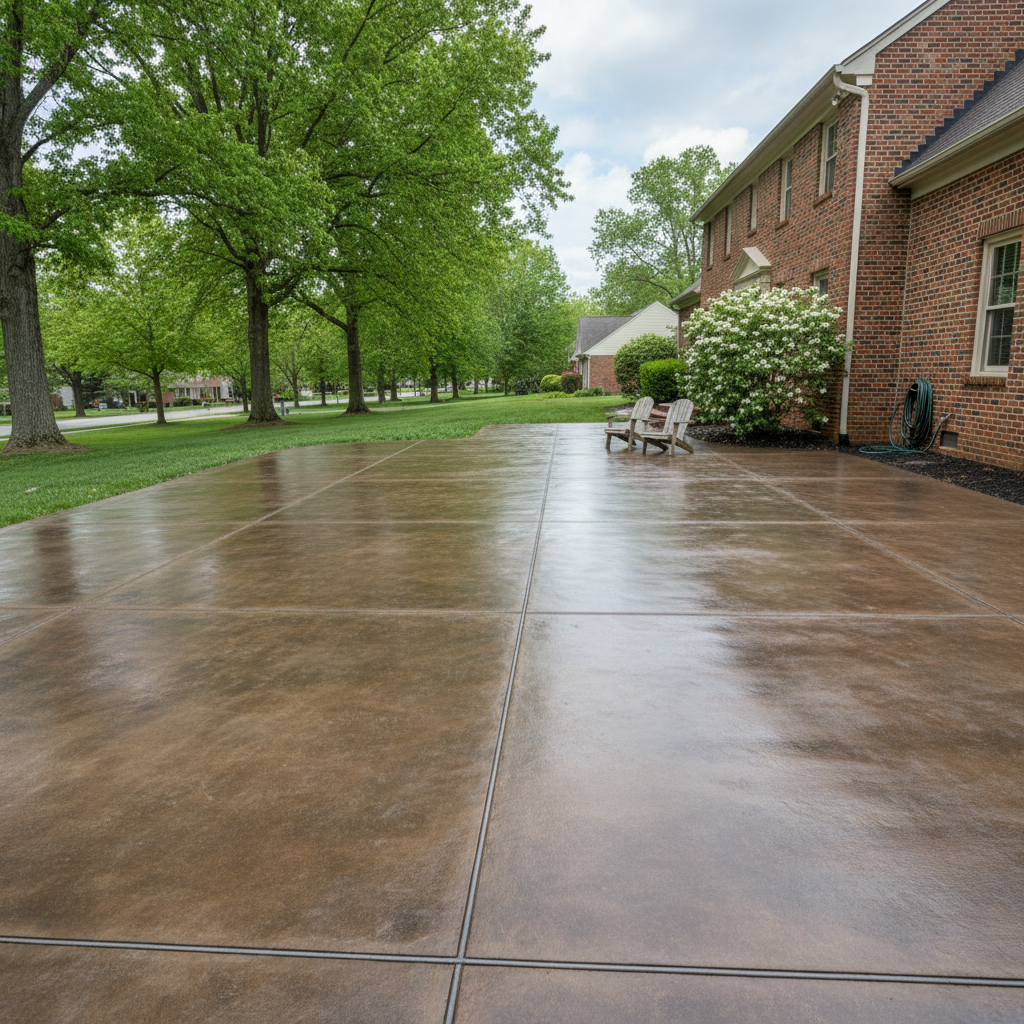
So, you've got some beautiful stained concrete, right? Maybe it's a patio, a walkway, or even an interior floor. It probably looks fantastic, and you likely picked it for its unique style and how tough it is. But "tough" doesn't mean you can just ignore it. If you want that rich color and smooth finish to stick around, especially with our wild Waldorf weather, you'll need to put in a little effort. Don't worry, it's not brain surgery, but if you ignore it, its life will definitely be cut short.
Making Your Stained Concrete Last Longer
The best thing you can do to protect your stained concrete is seal it properly. When we stain concrete, we always put on a good quality sealer right after. This isn't just to make it shiny; it's the protective layer that stops moisture, dirt, and UV rays from messing with the stain itself. Think of it like sunscreen for your concrete. Over time, that sealer wears thin, especially in places where people walk a lot or spots that get constant sun and rain.
You'll want to put on a fresh layer of good quality sealer every 2 to 5 years. How often depends on how much traffic it gets and how exposed it is to the elements. For an outdoor patio that sees a ton of foot traffic and gets hammered by summer sun and winter ice, you might be looking closer to that 2-year mark. An indoor floor in a room that doesn't get used much could go longer, no problem. The trick is not to wait until the old sealer is completely gone. A good contractor, like us at Oasis Concrete, can tell you which sealer is best for your specific project and our local conditions.
Another big one? Keep it safe from heavy impacts and harsh chemicals. Don't drag heavy furniture across it without putting pads underneath. If you're working on a car or some other project nearby, toss down a tarp to catch any oil, paint, or other spills. Our humid Maryland summers can also mean more algae and mildew growing on outdoor surfaces. Cleaning these off regularly stops them from slowly eating away at the sealer.
Regular Upkeep: What You Need to Do
Keeping your stained concrete looking great is mostly about simple, consistent cleaning. For inside floors, a dust mop or a soft broom is your best friend. If something spills, wipe it up fast. Don't let anything sit and soak into the surface, even if it's sealed. For tougher dirt, a pH-neutral cleaner mixed with water is usually all you need. Stay away from harsh stuff like bleach, ammonia, or anything abrasive. Those can strip the sealer and even damage the stain.
For outside stained concrete, like your patio or pool deck, a good sweep to get rid of leaves and debris is a weekly must. Then, give it a rinse with a garden hose. If it's looking a bit dull, a pressure washer on a low setting (no more than 1200-1500 PSI, and keep that nozzle moving!) can do wonders. Just be careful not to get too close or use too much pressure, or you'll blast off your sealer. Again, a mild, pH-neutral cleaner can be used with a soft brush for those stubborn spots. You know that red clay soil we have around parts of Charles County? It can really get tracked onto outdoor surfaces, so rinsing regularly helps keep that from building up and staining.
Always test any new cleaning product in a hidden spot first, just to be safe. And make sure the surface is totally dry before you put anything back on it or let heavy traffic resume after a deep clean, okay?
Signs You've Got a Problem
Your concrete will practically tell you when it needs some attention. Here are a few things to keep an eye out for:
- Dullness or Fading: If your bright color starts looking muted or patchy, especially where people walk a lot or in sun-exposed areas, your sealer is probably wearing thin. That's your signal to re-seal.
- Water Penetration: When you spill water on a properly sealed surface, it should bead up, just like on a freshly waxed car. If water soaks in and darkens the concrete, your sealer is gone, and your concrete is vulnerable.
- Cracking or Chipping: Small hairline cracks are sometimes unavoidable with concrete, but if you see bigger cracks, spalling (flaking or chipping), or pitting, that's a structural issue, not just a surface one.
- Discoloration or Stains: Stubborn stains that won't come out with mild cleaning, or new, unexplained dark spots, could point to moisture problems underneath or a compromised sealer letting things soak in deep.
- Algae/Mildew Growth: While some growth is normal in our damp climate, lots of recurring patches that are tough to remove might mean the surface isn't drying out right or the sealer's protective qualities are fading.
When to Call a Pro
Most of the regular cleaning and even re-sealing can be a DIY job if you're up for it. But there are times when you really should call in the pros. If you're seeing significant cracking, big chips, or the concrete itself is falling apart, that's way beyond a simple maintenance fix. We're talking about potential structural repairs or even replacement, and that's definitely a job for experienced concrete contractors like Oasis Concrete.
Also, if you're not sure what kind of sealer to use, how to properly clean a stubborn stain without damaging the surface, or if you just don't have the time or equipment to do the job right, give us a call. We've got the expertise and the right tools to bring your stained concrete back to life or keep it looking its best for years to come. Investing in professional help now can save you a lot of headaches and expense down the road.