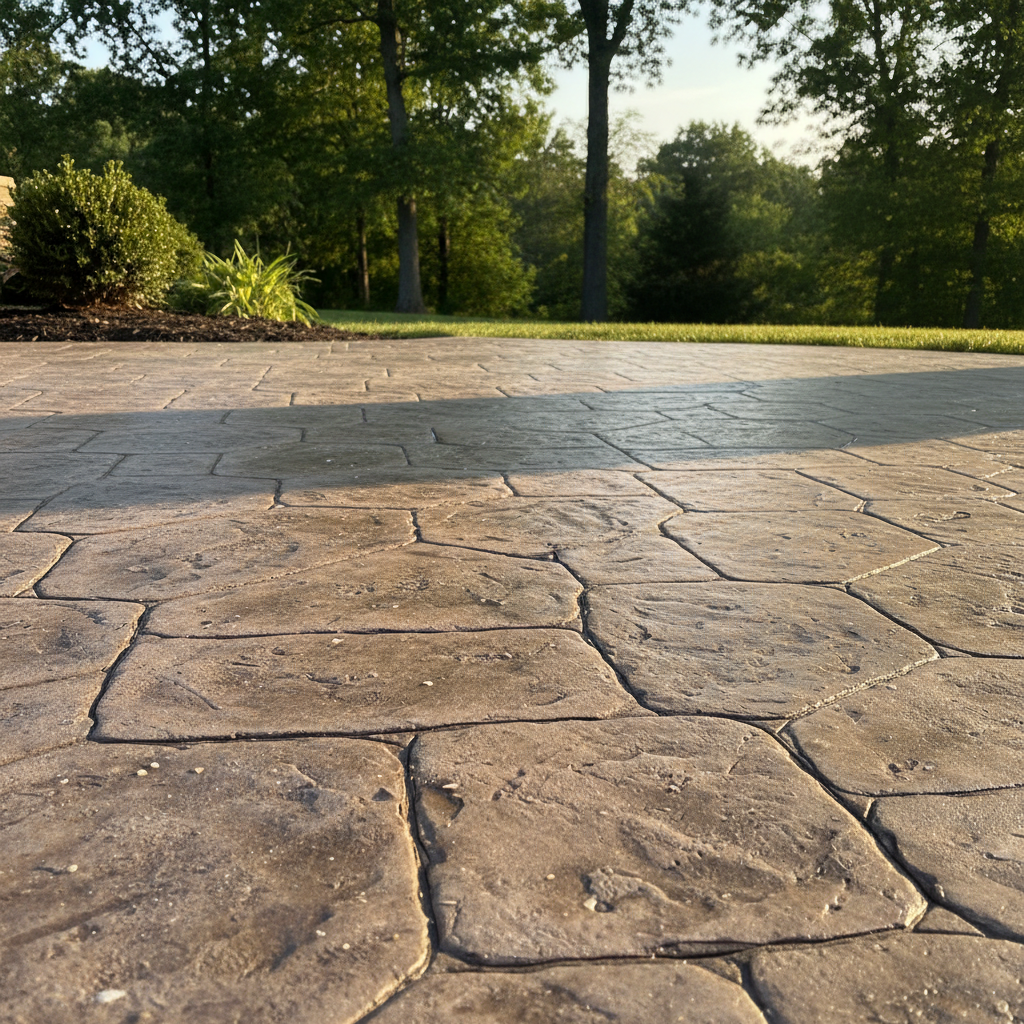
Is stamped concrete slippery, especially when wet?
This is probably the most common question I get, and it's a good one, especially with the humidity and sudden downpours we get here in Southern Maryland. The short answer? It can be, but it really doesn't have to be. Any smooth, hard surface can get slick when wet, right? Just think about your kitchen floor. Stamped concrete gets its texture from the stamping mats we use, which helps a lot. But the real key to preventing slips is the sealer we apply. A standard sealer can sometimes make things a bit slicker, true. That's why we almost always add a non-slip additive to the sealer. It's a fine grit, usually made of aluminum oxide, that mixes right in. You won't really see it, but you'll definitely feel the difference in traction. So, if you're worried about it, make sure your contractor is using a non-slip additive. It's a small step that makes a big difference for safety, especially around pools or on sloped driveways, wouldn't you agree?
How long does stamped concrete last, and what affects its lifespan?
Look, nothing lasts forever, but a properly installed and maintained stamped concrete surface can easily last 20-30 years, sometimes even longer. I've seen some patios around St. Charles that are still looking great after two decades. What affects it? A few things, actually. First, the quality of the installation. If the base isn't prepped right, or the concrete mix isn't good, or it's not cured properly, you're going to have problems down the road. That's on the contractor, plain and simple. Second, the weather. We get a full range of seasons here in Waldorf — hot, humid summers and freezing winters. Those freeze-thaw cycles can be tough on any concrete. Good sealing helps protect against that. Third, maintenance. If you never clean it or reseal it, it's not going to hold up as well. It's like anything else; a little care goes a long way. Heavy traffic, like parking heavy vehicles on a patio designed for foot traffic, can also shorten its life, of course.
What kind of maintenance does stamped concrete need?
It's not high-maintenance, but it's not no-maintenance either. Think of it more like taking care of a nice deck or even your car — you gotta clean it and protect it. The main thing is cleaning and resealing. I usually tell folks to clean it once or twice a year. A good sweep to get leaves and dirt off, then a wash with a hose and maybe a mild detergent if it's really dirty. You can use a pressure washer, but be careful not to hold it too close or use too high a pressure, especially on older, less sealed concrete, as you can damage the surface or strip the sealer. The most important part is resealing. For most residential stamped concrete, I recommend resealing every 2-3 years. This protects the color, prevents staining, and helps with that slip resistance we talked about. If it's in a high-traffic area or gets a lot of sun, you might need to do it more often. It's not a tough job to do yourself, but if you're not comfortable, Oasis Concrete can certainly help you out with it.
Can stamped concrete crack?
Yes, it can. Concrete cracks. It's a fact of life, and anyone who tells you otherwise isn't being straight with you. The goal isn't to prevent all cracks, but to control where they happen. That's why we put in control joints — those lines you see cut into the concrete. We plan those out so that if the concrete is going to crack due to expansion and contraction, it cracks along those lines, making it much less noticeable and structurally sound. Cracks can also happen if the ground underneath shifts, or if the concrete wasn't poured thick enough for its intended use, or if heavy loads are placed on it that it wasn't designed for. A good contractor will minimize the risk of unsightly or damaging cracks through proper base prep, concrete mix, and joint placement. Hairline cracks are pretty common and usually nothing to worry about, especially after a few years.
How does stamped concrete handle our Waldorf weather, especially freezing?
Our weather here in Waldorf, with its hot summers and cold, wet winters, is definitely a factor. The biggest concern is the freeze-thaw cycle. When water seeps into tiny pores in the concrete and then freezes, it expands, putting stress on the concrete. If that happens repeatedly, it can lead to spalling — where the surface flakes off — or more significant cracking. This is where good installation and proper sealing are crucial. We use concrete mixes designed for our climate, often with air-entrainment, which creates microscopic air bubbles that give freezing water a place to expand without damaging the concrete. And again, that sealer acts as a protective barrier, preventing water from penetrating the surface. If your stamped concrete is sealed correctly and maintained, it holds up really well to our local weather. I wouldn't recommend it if it couldn't handle a Charles County winter, plain and simple.
What if I want to change the color of my stamped concrete later?
You can definitely do that, but it's not like repainting a wall. When we first install stamped concrete, the color is either mixed into the concrete itself (integral color) or applied to the surface during the finishing process (color hardener). Sometimes we also use release agents that add a secondary, antiquing color. If you want to change the color later, you're generally looking at applying a tinted sealer or a concrete stain. A tinted sealer will add a transparent or semi-transparent layer of color and reseal it at the same time. This is a pretty common way to refresh the look or slightly alter the shade. Concrete stains, either acid-based or water-based, can also be used to change the color, often creating a more translucent, mottled effect. It's a good idea to test any new color on an inconspicuous spot first to make sure you like the result. It's not a full redo, but it can certainly give your patio or walkway a fresh new look without tearing it all out.
Is stamped concrete more expensive than regular concrete?
Generally, yes, it is. Think about it: you're not just getting a plain gray slab. You're getting a decorative surface that mimics natural stone, brick, or wood. That involves more materials — color hardeners, release agents, specialized sealers — and a lot more labor. The stamping process itself takes skill and time. You've got the crew pouring the concrete, then timing it just right to apply the color, then laying down the mats and compacting them, then pulling them up, and finally, washing and sealing. There are more steps, more specialized tools, and more artistry involved than just pouring a basic concrete slab. So, while it's an investment, you're paying for that aesthetic appeal and the added value it brings to your home. It's usually less expensive than installing natural stone or pavers, though, so it's a good middle-ground option that gives you a high-end look without the highest-end price tag.