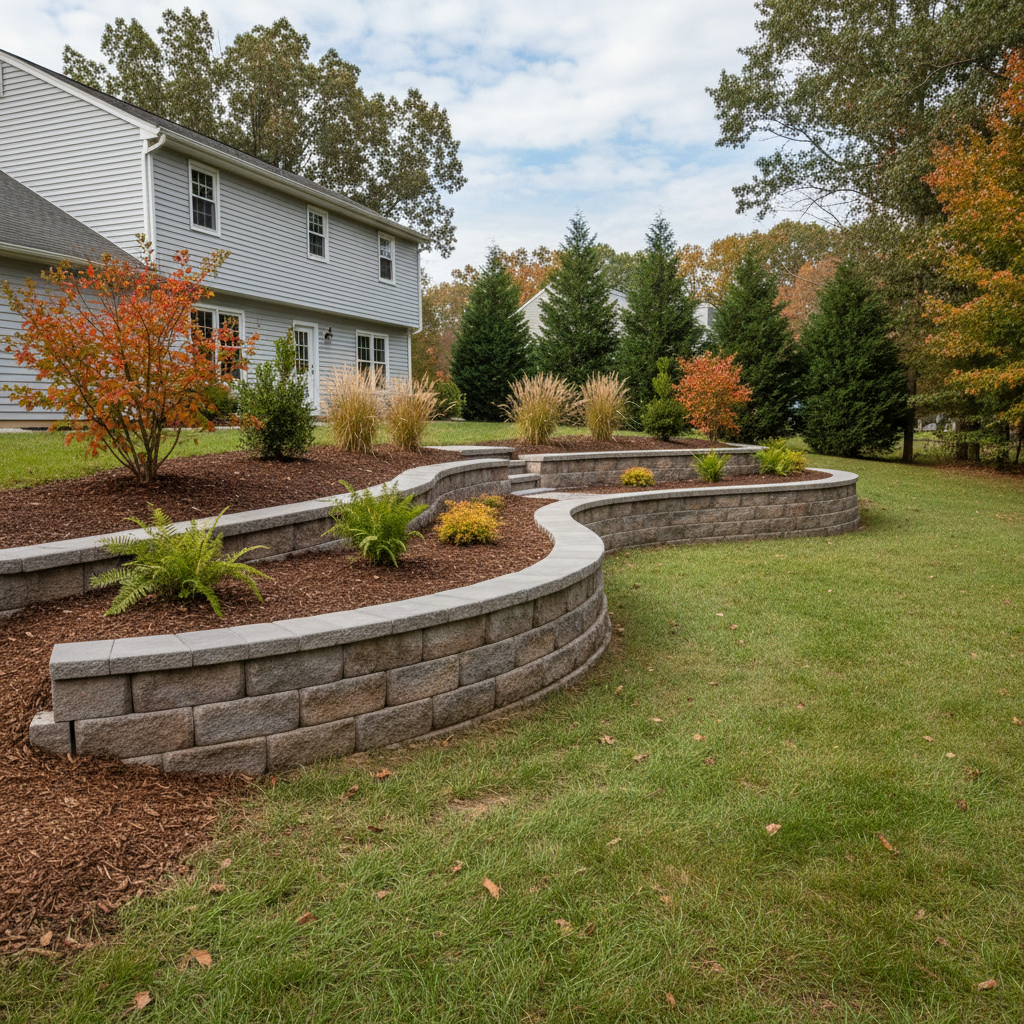
So, you've got a retaining wall, or maybe you're thinking about putting one in. Maybe it's holding back a sloped yard, creating a level patio space, or just adding some serious curb appeal to your Waldorf home. Whatever its job, that concrete wall is a big investment, and let's be honest, our weather here can be pretty tough on them. I've seen a lot of walls over the years, and knowing when to build, what to watch for, and how to protect them can save you a ton of headaches and money down the line. Trust me on this one.
When's the Best Time to Build or Repair?
Timing is everything when it comes to concrete. You can't just pour concrete whenever the mood strikes, especially not for something as critical as a retaining wall. The sweet spot for pouring concrete in our area is usually spring and fall. Why? Because you want consistent, moderate temperatures. We're talking daytime highs generally between 50 and 80 degrees Fahrenheit. This lets the concrete cure properly, gaining its full strength without drying too fast or freezing.
Pouring in the dead of summer, when we often hit those sweltering 90-degree days with high humidity, can be risky. The concrete can dry out too quickly, leading to shrinkage cracks. And winter? Forget about it for new pours. Freezing temperatures are the enemy of fresh concrete. Water in the mix expands when it freezes, which can absolutely destroy the concrete's integrity before it even has a chance to set. If you're looking at repairs, like patching cracks or tuckpointing, you'll still want those moderate temps. Trying to fix something when it's too hot or too cold just means the repair won't hold up, plain and simple.
What Weather Conditions Really Matter?
Beyond just temperature, there are a few other weather factors we're always keeping an eye on when we're working on retaining walls for folks in places like St. Charles or Bennsville.
- Rain: You absolutely cannot pour concrete in heavy rain. It dilutes the mix, weakens the concrete, and can wash away the surface. A light drizzle might be manageable with proper protection, but generally, we need dry conditions.
- Wind: High winds can speed up the drying process, especially on hot days, which can lead to surface cracking. We'll often use windbreaks if it's a concern.
- Humidity: Believe it or not, high humidity can slow down the curing process, which isn't always a bad thing as it helps prevent rapid drying. But very low humidity, combined with heat and wind, is a recipe for trouble.
- Ground Conditions: This isn't strictly weather, but it's totally related. Our clay-heavy soils around Waldorf can hold a lot of water. If the ground is saturated from heavy rains, it can impact the stability of the foundation for your retaining wall. Good drainage behind the wall is crucial, and we always make sure that's handled correctly.
Year-Round Protection for Your Investment
Once your retaining wall is in, or if you've had one for a while, protecting it from our local climate is an ongoing job. You want that wall to stand strong for decades, right?
- Drainage is King: I can't stress this enough. The biggest enemy of a retaining wall is hydrostatic pressure – water building up behind it. Make sure your wall has proper drainage, usually a gravel backfill and a perforated pipe (weep holes) to let water escape. If you see water pooling or constantly seeping through the wall face, you've got a drainage issue that needs addressing fast.
- Seal It Up: Consider applying a high-quality concrete sealer every few years. This helps protect the concrete from moisture penetration, freeze-thaw cycles, and chemical damage (like de-icers if you use them nearby). Think of it like sunscreen for your wall.
- Watch for Cracks: Small hairline cracks are common and usually nothing to worry about. But if you see cracks that are widening, stepping, or if the wall itself is bowing or leaning, that's a red flag. Get it inspected by a pro like us at Oasis Concrete right away. Early detection can prevent a minor repair from becoming a full wall replacement.
- Keep it Clean: Regularly clean off dirt, moss, and mildew. These can hold moisture against the concrete, and over time, contribute to degradation. A simple power wash (on a low setting, don't blast it too hard) usually does the trick.
- Landscaping Matters: Be mindful of what you plant near your wall. Tree roots can exert incredible pressure and damage the wall's foundation over time. Keep plants that require a lot of watering away from the immediate vicinity of the wall, too, as constant saturation isn't good.
Your retaining wall does a lot of heavy lifting for your property. Give it the attention it deserves, and it'll keep doing its job beautifully for many, many years. If you've got questions or concerns about your concrete retaining wall, don't hesitate to give us a call. We're here to help.